
Responsible Pokie Play in Australia — Practical Steps to Stay Safe, Set Boundaries and Find Help
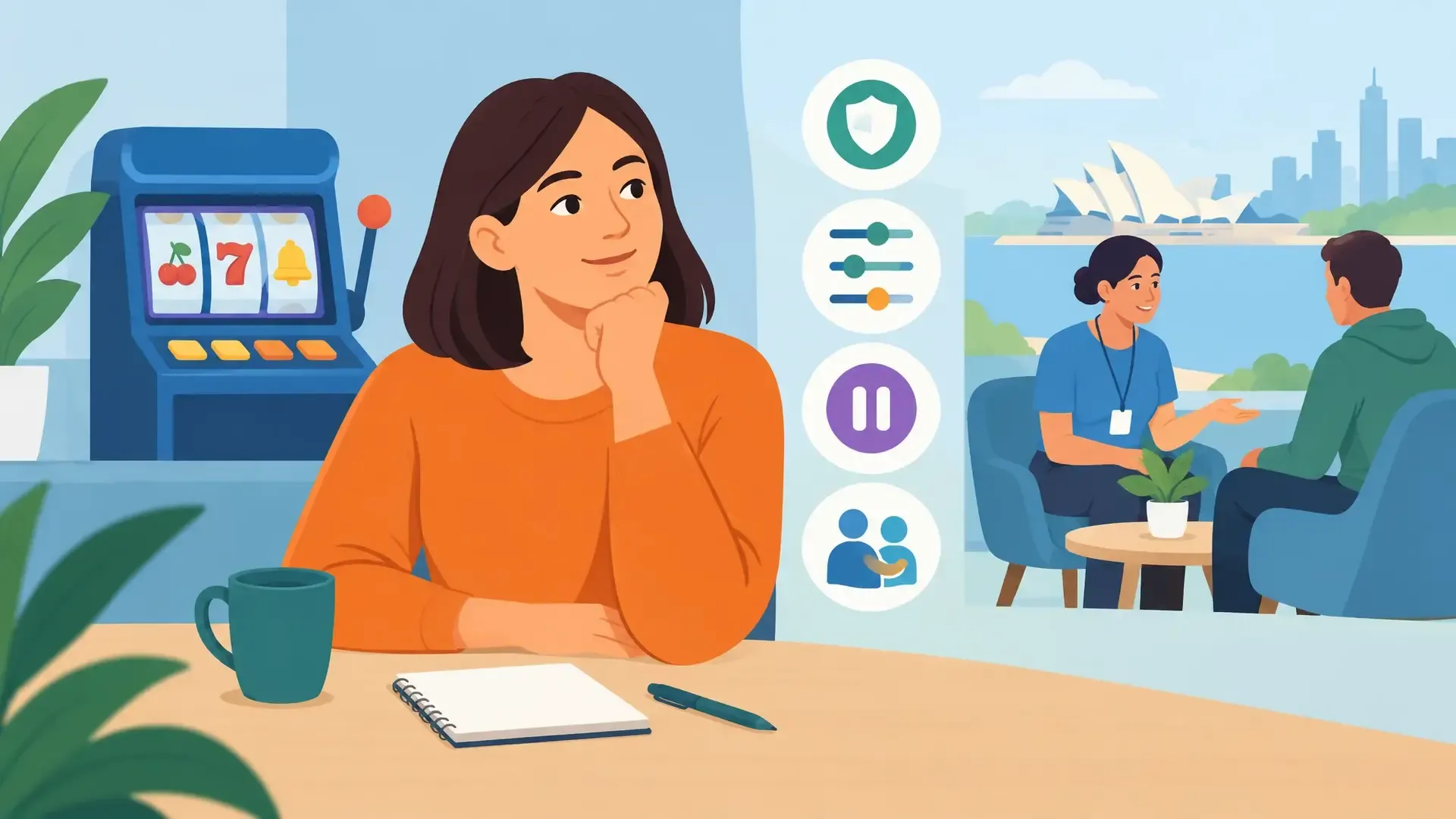
Gambling involves risk. Pokies are games of chance, outcomes are random, and losses can occur. This guide provides general information about safer gambling and support options; it is not medical, financial or legal advice.
What responsible gambling means
Responsible gambling is an ongoing safety practice, not a promise that you can always stay in control or avoid harm. Before playing, consider whether gambling fits comfortably within your life today. If you are already worried about your gambling, taking a complete break and seeking support may be safer than trying to set another limit.
There is no reliable strategy that guarantees a win on a pokie. Changing stakes, choosing a particular game or studying game information cannot remove the underlying risk. Promotional offers, including free spins, are still connected to gambling and should never persuade you to play beyond the boundaries you have set.
Set boundaries that do not depend only on money
Financial limits can be useful, but responsible gambling in Australia should also include practical limits around time, mood and access. Decide how long a session will last before you begin. Set an alarm or use an account reality check if one is available, then stop when the planned session ends rather than extending it “just a little longer”. Take regular breaks away from the screen or venue, and use those breaks to check how you are feeling. Read also: Understanding RTP and Volatility in Australian Pokies: A Practical Guide to Payouts.
Avoid gambling when you are distressed, angry, very tired or affected by alcohol or other drugs. These conditions can make it harder to follow a decision made earlier. Keep gambling separate from rent, bills, food, medication, transport, work, study and family responsibilities. If you find yourself using real money needed for essentials, pause immediately and speak with a qualified support service or financial counsellor.
Account tools can make a boundary easier to follow, but they cannot make gambling risk-free. Depending on the operator, you may be able to set deposit or spending controls, session reminders, time-outs, cooling-off periods, marketing opt-outs or account closure. Look through the account’s safer-gambling section and check the specific operator’s terms. If a control is difficult to find or change, contact customer support and ask for the process in writing.
Recognise possible signs of gambling harm
A warning sign is not a diagnosis, and one sign alone does not tell the whole story. It is a reason to pause and take your concerns seriously, especially if the behaviour is becoming more frequent or difficult to discuss.
- Gambling for longer or more often than you intended, or losing track of time while playing.
- Trying to recover losses by gambling again, even after deciding to stop.
- Thinking about gambling frequently, feeling restless without it or arranging more of your day around it.
- Hiding, minimising or being untruthful about how much time, money or attention gambling receives.
- Missing work, study, appointments or time with family and friends because of gambling.
- Feeling anxious, low, irritable or distressed, or noticing financial and relationship problems connected with play.
If any of these experiences sound familiar, do not try to win back losses. A loss is not a debt to the machine, and further gambling can deepen the problem. Pause play, tell someone you trust and remove easy access where possible. This might mean logging out, deleting gambling apps, blocking promotional messages, leaving a venue or asking a trusted person to help you make the next step. Professional support is available even if the problem does not feel severe.
Understand self-exclusion in Australia
Self-exclusion is a formal way to ask an operator or venue to prevent or restrict your access to gambling for a chosen period or under a relevant process. Online operators and physical venues may have different procedures. Some services cover a particular operator, brand, venue or group of venues, so do not assume that one request automatically covers every form of gambling.
For online and phone wagering, eligible Australians may also be able to use broader schemes such as BetStop. Its scope is not the same as a blanket exclusion from all gambling, and eligibility and coverage can change. Check current official guidance carefully before relying on any scheme. Gambling Help Online provides separate information about online and venue self-exclusion and can help you understand which process may apply. Read also: Beginner's Guide to Bankroll Management for Online Pokies in Australia.
Self-exclusion works best alongside other steps, such as removing saved payment details, asking a trusted person for support and arranging counselling. It is a protective barrier, not a treatment or a guarantee that every gambling opportunity will be inaccessible. If you are comparing safety approaches internationally, you may also come across information about responsible gambling in the Netherlands; always check that advice against Australian services and rules.
Where to get gambling help in Australia
Gambling Help Online offers free online support across Australia 24 hours a day, seven days a week. The Gambling Helpline is 1800 858 858. It can provide information, counselling pathways and guidance about self-exclusion. State and territory Gambling Help services can also connect you with local counselling and support, including help for family members.
You can speak with a gambling counsellor, psychologist or GP if gambling is affecting your wellbeing, relationships, work, housing or finances. A financial counsellor may help you understand urgent money pressures and practical options without judging you. You do not need to wait until debts, relationship breakdown or a mental-health crisis has occurred.
If gambling is contributing to immediate emotional distress, Lifeline is available on 13 11 14, with additional text and chat options through its service. If life is in immediate danger, call Triple Zero (000). These crisis services are appropriate when you need urgent emotional support; gambling-specific services can help with the longer-term pattern.
How friends and family can help
If you are concerned about someone else, choose a calm time and describe what you have noticed rather than accusing them or demanding a confession. Encourage them to contact a professional service, and offer to sit with them while they make the call. You can set your own boundaries around money, shared accounts and conversations, and seek support for yourself.
You are not responsible for another adult’s recovery, and secretly covering losses or taking on unmanageable debt can make the situation harder. A counsellor can help you decide how to support the person while protecting your own wellbeing and finances. If they are unwilling to seek help, you can still contact Gambling Help services for guidance as a family member.
Take one safe step today
You do not need to prove that gambling has become “bad enough” before asking for help. Stop the next session, tell one trusted person, use an available account or self-exclusion tool, or contact Gambling Help Online on 1800 858 858. Early support is a practical act of care, not a failure of willpower.